Caffeine calculator: how much caffeine do you drink each day?
Calculate the caffeine in your coffee, tea and soft drinks, then compare it with a daily guideline.
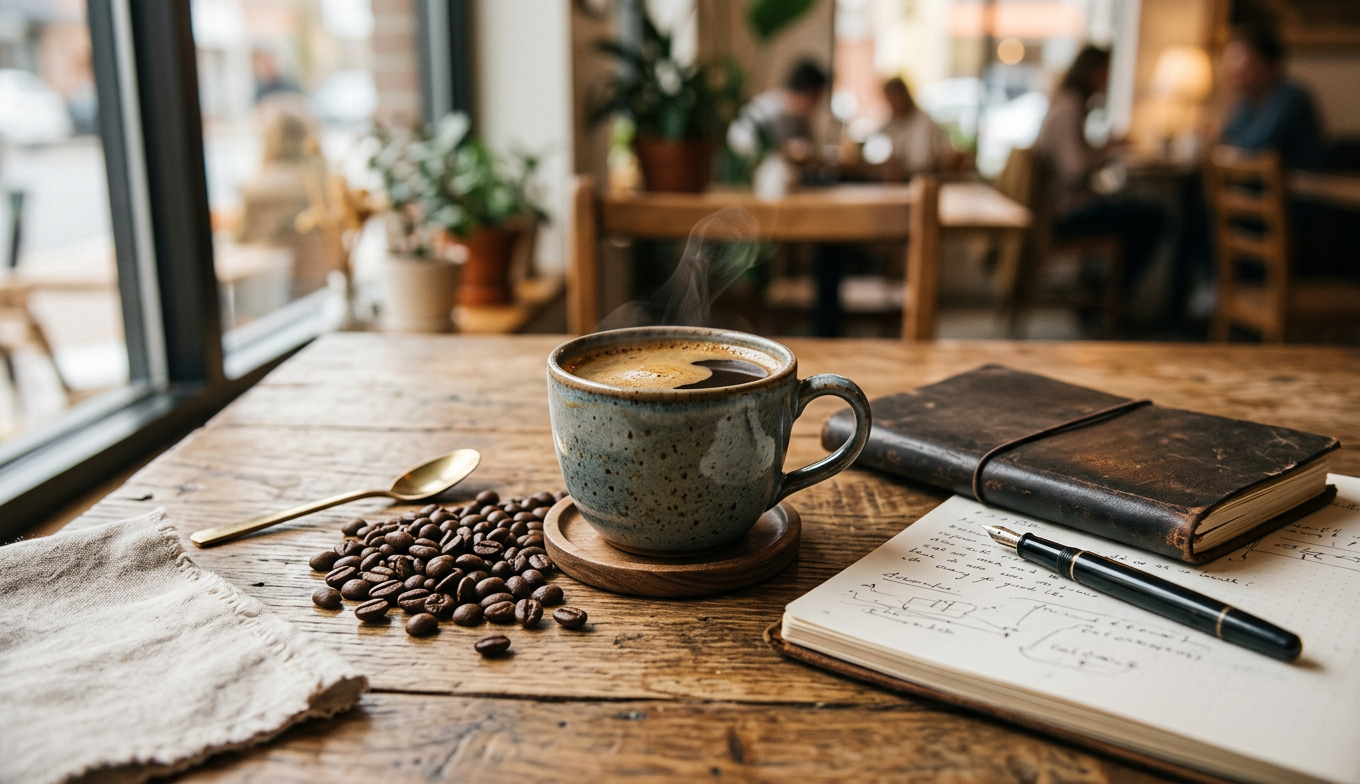
An espresso in the morning, coffee at work and cola after lunch: caffeine comes from many sources, so it is easy to lose track. This caffeine calculator adds up your drinks and compares the result with a widely used daily guideline.
Good Mood Coffee
Caffeine calculator
Enter only the coffee grams — water volume does not change total caffeine. A level teaspoon is about 2 g; a level tablespoon about 6 g.
Custom drink
Within the guideline
Total
0 mg
approx. 0–0 mg (honest range)
Daily limit
400 mg
0% · Remaining to limit: 400 mg
Values are estimates and do not replace medical advice.
How the caffeine calculator works
Visit your favorite café in Torrevieja!
Torrevieja CafésChoose your drinks, enter the number of servings and adjust the volume in millilitres — a cup may be 150 ml while a mug may be 350 ml. Espresso is counted in shots. You can also add a custom drink from its label. For ground coffee, enter grams per serving and choose the bean type: arabica, a robusta blend or mostly robusta. Water is not a separate input because it mainly changes strength, not the total caffeine extracted. A level teaspoon is about 2 g and a level tablespoon about 6 g. The calculator shows a realistic range because caffeine varies with beans and extraction. Weight is only used for the teenager profile, with a guideline of about 3 mg/kg.
How much caffeine is in coffee and other drinks?
These are approximate averages per millilitre: espresso is about 2.3 mg/ml, filter coffee 0.38 mg/ml, instant coffee 0.33 mg/ml, black tea 0.18 mg/ml, green tea 0.12 mg/ml, cola 0.11 mg/ml and an energy drink 0.32 mg/ml. The calculator shows a central estimate and a range of roughly 75–125%. Actual caffeine depends on the beans, brewing method and serving size. Cappuccino and latte are usually counted as one or two espresso shots.
How much caffeine is safe each day?
According to EFSA, healthy adults can consume up to 400 mg of caffeine per day, while a single dose up to 200 mg is not considered a safety concern. During pregnancy and breastfeeding, the recommended limit is 200 mg per day. For children and teenagers, around 3 mg per kilogram of body weight per day is used.
When caffeine stops helping
Caffeine usually has a half-life of 3–7 hours. Larger amounts may be linked with palpitations, irritability, trembling or difficulty falling asleep. If this happens, reduce the amount or move your last coffee earlier.
How to reduce caffeine without giving up coffee
Swap one serving for decaf, choose a weaker brew or use a smaller cup. Use our coffee-to-water ratio calculator for brewing proportions and the coffee cost calculator to estimate your spending.
Frequently asked questions
How much caffeine is in a cup of coffee?
Usually around 65–100 mg. An espresso has about 70 mg and filter coffee about 95 mg.
How many coffees can you drink per day?
For a healthy adult, the guideline is about 400 mg per day, roughly four filter coffees.
How much caffeine is safe during pregnancy?
The recommended limit is no more than 200 mg per day, including tea, cola and energy drinks.
Does decaf coffee really contain no caffeine?
It contains very little, usually a few milligrams. It is not completely caffeine-free.
This calculator is for information only and does not replace medical advice. If you have heart disease, high blood pressure, anxiety, sleep problems, are pregnant or take medication, discuss caffeine with a healthcare professional.
Related Articles

All About Coffee: From Bean to Cup - Origin, Varieties, Health & Brewing
A comprehensive guide to the world of coffee. Learn the differences between Arabica and Robusta, the health benefits of coffee, where top beans come from, and how to brew specialty coffee.
Where to Get the Best Coffee in Alicante? A Guide to Specialty Coffee & Workspots
Looking for top-tier specialty coffee, a delicious brunch, or a cozy laptop-friendly cafe with fast Wi-Fi in sunny Alicante? Here is our curated guide.
